skip to main |
skip to sidebar
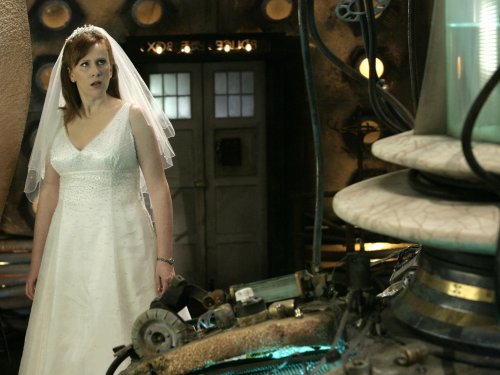
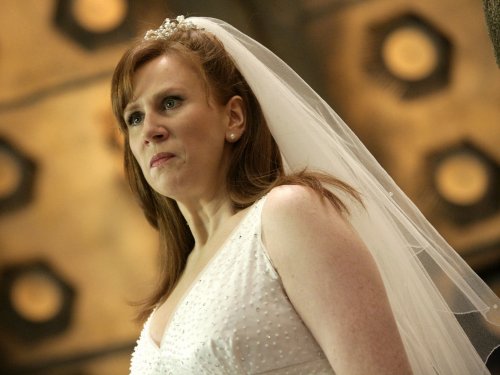
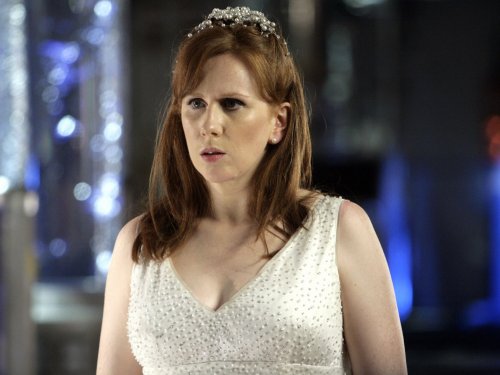
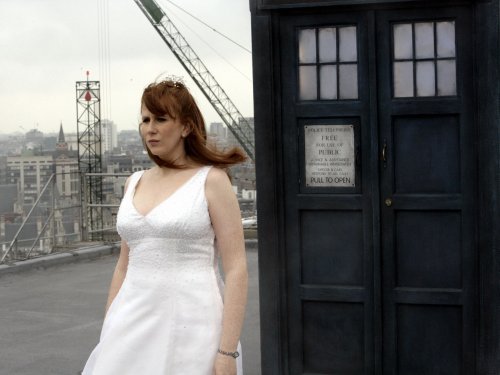
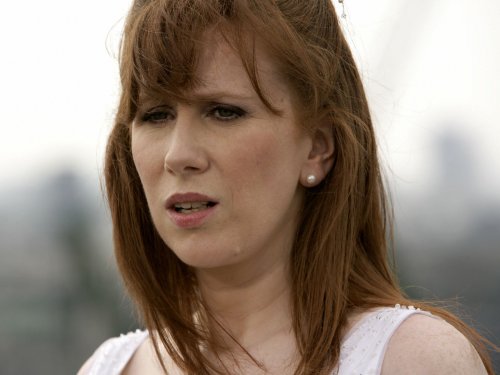
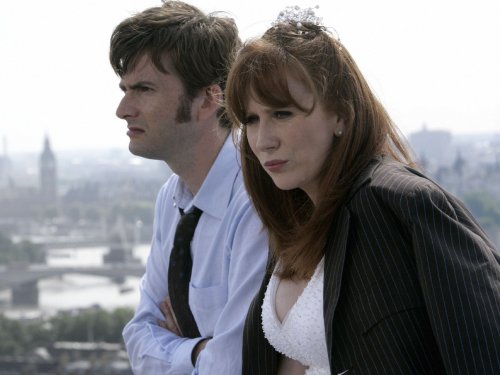
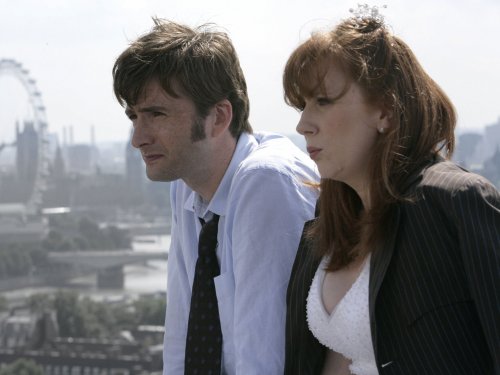
 So, that most special of days is almost here. No, not my wedding day! And, as well as it being Christmas Day, the 25th December 2006 is the day of the second “Doctor Who” Christmas Special… the third if you count “The Feast of Steven”. Following on from last year’s story, “The Christmas Invasion”, “The Runaway Bride” sees the return of the brass instrument-laden deadly killer Santas, and this time with redesigned masks. Oh, the horror! More importantly, perhaps, this is the first episode since the return of the series last year that won’t co-star Billie Piper as the Doctor’s companion, Rose. Love it or loathe it, her story has been the binding factor, the continuity if you like, from episode-to-episode over the last two years. The question is, therefore, how will the Doctor fare without her? Why not sidestep the issue with a suitable diversion? Then, when the series returns, viewers will have, hopefully, forgotten the question ever arose and move on without further ado…Thus, before settling down with new sidekick, Miss Jones, the Doctor faces a brief encounter with bride-to-be Donna, as played by actress and comedienne Catherine Tate. I’m not familiar with her sketch show but you’d have to have been living as an exile on the planet Gallifrey not to know her catch phrases. The best known of these was being repeated, ad nauseam, in the DVD department of one of the local supermarkets a few weeks ago whilst I was out tracking down Bond, James Bond. You might think Sainsbury’s wouldn’t be the place to uncover a secret agent but you’d be wrong! Anyway, I best know Catherine from her brief appearance in episode four of last year’s BBC production of “Bleak House” in which she played Mrs. Chadband. Others may recognise her as Mitzi Kosinski from ITV1’s “Marple: A Murder is Announced”, also from last year, and which coincidentally featured Cassandra actress Zoë Wanamaker.
 Starring opposite David Tennant, in “The Runaway Bride”, is actress Sarah Parish playing the sinister Empress of the Racnoss, seen here together at the Bafta Television Awards, 2005. They’ve also worked together before on “Blackpool” and, perhaps of some interest, Sarah has additionally worked with Ms. Piper but not on “Doctor Who”. They both appeared in last year’s reinterpretation of Shakespeare’s “Much Ado About Nothing” and, if you don’t already know, no prizes for guessing which playwright pops up in the second episode of next year’s new season of Time Lord adventures. I reckon they eat a lot of Chinese takeaway in the television industry, influencing them to use few ingredients but in every possible permutation! However, the publicity for this year’s Special seems focused on Ms. Tate so, as it’s Christmas, I’ve prepared another ten-picture gallery for your delectation. After all, Christmas wouldn’t be Christmas without one of Mr. Davies’ famous plum puddings!!
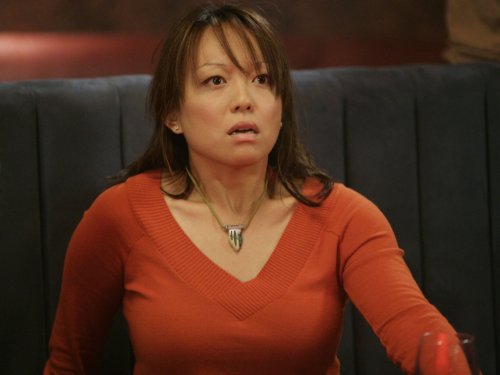
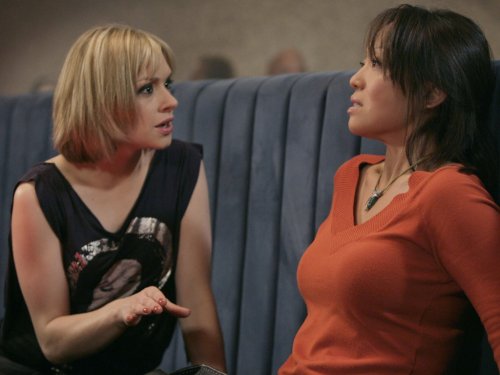
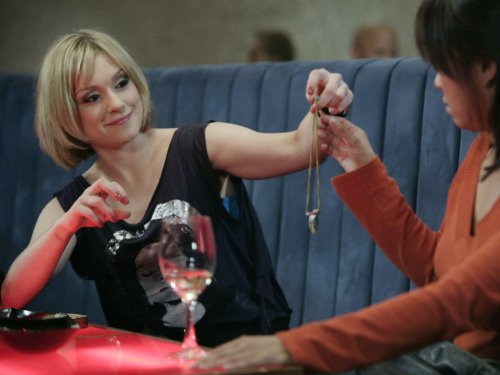
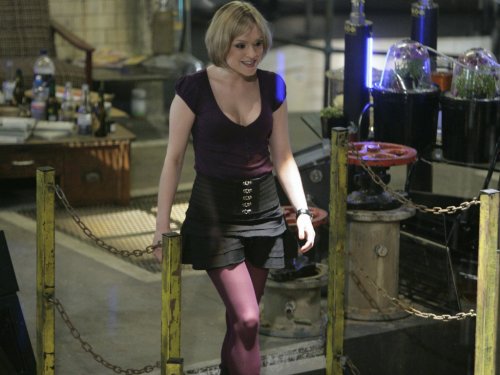
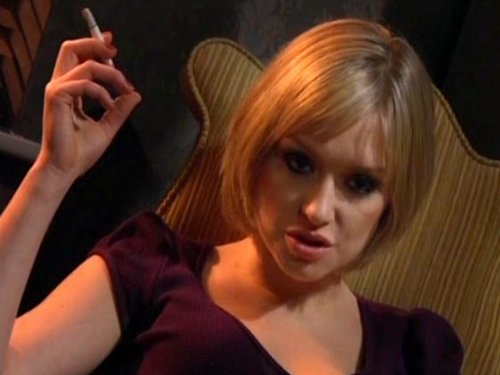
 I don’t know how interested readers of this Blog are in stills from science fiction television series but I seem to amass them fairly rapidly, more than I can ever possibly use. I suspect it’s a continuation of collecting sweet cigarette and bubble-gum cards from when I was a child but without that teeth rotting element! I can remember a shop keeper going through her entire “Thunderbirds” stock, in a little newsagents in Paignton, during a summer holiday long ago, looking for that one elusive card to complete my set of fifty. She didn’t find it but I bought a packet anyway. I must have found it eventually, although where and when eludes me, as I still have them stored away for posterity. I actually have two sets of the first series, possibly one belonged to my brother, and a single set of the second. I prefer the latter, being made up of photos as opposed to artists impressions of the vehicles and characters. I also own a set of the sixty-four “Captain Scarlet” bubble-gum cards which mix artwork with photos and when collectively reversed make a single image.Moving effortlessly on from Spectrum Pursuit Vehicles to a certain Sport-Utility Vehicle, I have to admit that, despite some reservations, my imagination seems to have been captured a little by episode seven of “Torchwood”. In a parallel universe, there might well be a set of trading cards for the series although, considering what I assume to be the age of the intended audience, that seems less likely than for “Doctor Who”! With this in mind, I’ve put together a little ten-picture gallery featuring the two leads from “Greeks Bearing Gifts”. It was Tosh’s episode but benefited greatly from the guest star, Daniela Denby-Ashe as Mary/Philoctetes, appearing throughout, rather than briefly at the story’s conclusion as was the case with Owen Teale in “Countrycide” and Gareth Thomas in “Ghost Machine”. The first of the set is above showing the moment our heroine first tries on the alien pendant with the remaining nine directly below in a separate post. Pictures two through six continue the exchange that took place in the Cardiff bar with the remaining four from the story’s climax at the heart of the Hub.
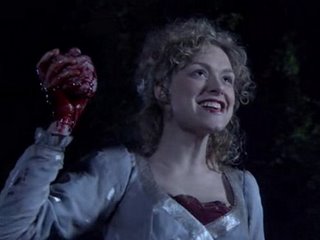
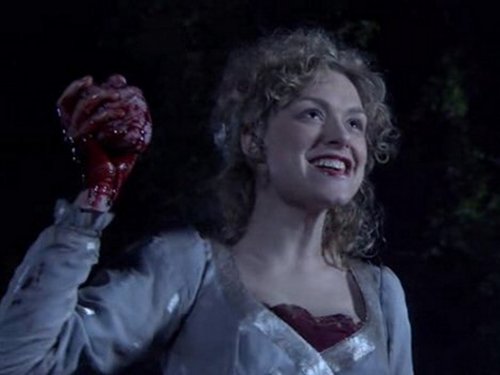
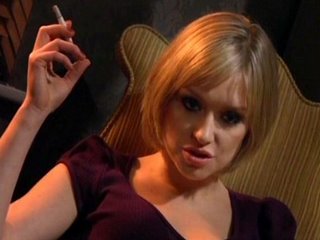 “Torchwood” seems to be attracting interesting guest stars. Last week, in Chris Chibnall’s well-titled “Countrycide”, Owen Teale popped up towards the end of the episode as the leader of a group of Brecon Beacon villagers intent on cannibalism once every decade, almost as though he’d stayed on at the end of “Vengeance on Varos” ready to appear in “The Two Doctors”! And this week, starring throughout Toby Whithouse’s “Greeks Bearing Gifts”, Daniela Denby-Ashe, best known for long running sitcom “My Family”, played exiled and abandoned alien “Mary” who worms her way into Toshiko’s affections, with the present of a pendant that enables the wearer to read the innermost thoughts of others, in order to eventually invite herself into the Hub of Torchwood itself to retrieve her ship. Said thoughts made for a depressing indictment of the human race.The balance between the personal relationships of the heroes and the science fiction strands of the story worked better in “Greeks Bearing Gifts” than it has previously, in both “Torchwood” and new “Doctor Who”, maybe because the alien artefact was a direct link between the two elements, making it an excellent plot device. Toby’s script benefited from his earlier experience writing “Doctor Who” episode “School Reunion” where the balance wasn’t as well executed. Daniela sustained a convincing performance throughout, possibly not an easy thing to do when alternating between tearing out the hearts of her victims down through time with present-day lesbian liaisons in Cardiff cafés! She played it as a femme fatale, which worked well enough, eventually brought to book by Captain Jack resetting her transport home to burn her up in the heart of the Sun. Hot stuff!!
 So, “Doctor Who” has reached its 43rd birthday. What condition it’s in depends on your point of view. For years, long-term fans hoped for its return, me included, and now it’s up-and-running some of us feel it would have been better left alone. I still don’t feel as though the programme, as I think of it, is actually back. It’s “Doctor Who”, Jim, but not as we know it! Anniversaries should be a time of celebration but not necessarily if the recipient is terminally ill. “Doctor Who” has rarely been more popular than it is now, maybe because it’s an altogether different beast from the show that ran between 1963 and 1989, in that it’s supposedly much slicker in its present state, or maybe because the marketing machine that persistently tells us it’s brilliant is simply better oiled than previously, even than what now seems like the halcyon days of John Nathan-Turner back in the Eighties.Russell T Davies has produced nothing that remotely touches the quality of “The Caves of Androzani” or “Revelation of the Daleks” despite hiring the same director to work on Tennant’s opening year, presumably hoping that some of Graeme Harper’s magic would rub off on the new format. Even when RTD has got close, the executive producer seems intent on throwing a spanner in the works. In “The Empty Child”, for example, in an otherwise inventive two-part story, the only thing this supposedly creative production team could come up with, when Nancy blackmails the homeowner, was a homosexual extramarital affair with the butcher. Does Russell really think it’s hip to fill the minds of ten-year-old children with what boils down to indoctrination through crappy writing? Playing with fairies at the bottom of the garden, in amongst the prickly roses, is perhaps left better to shows that go out later, shows like “Torchwood”.I suppose it could be argued that “Caves” goes over the top with its violence or that “Revelation” was too explicit in Jobel’s intentions towards Peri. If that is the case, why don’t these stories leave a bad taste in the mouth like some of the scenes in new “Doctor Who”? It doesn’t surprise me that Michael Grade has given the new series the thumbs up. I am surprised that Colin Baker is a fan. There are four serials I would much rather watch from season twenty-two than anything that has been produced in the last couple of years. Maybe I see “Doctor Who” in 1985 through rose-red ruby-tinted spectacles because these were the first serials I had the opportunity to video. But despite retaining these recordings, I’ve still purchased “Revelation”, “Vengeance on Varos” and “The Two Doctors” on DVD! Now, what I want to know is when is “Attack of the Cybermen” going to complete this quartet?!!
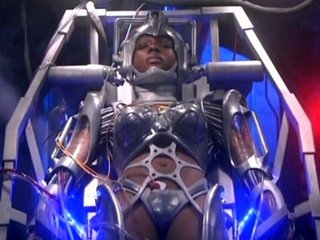
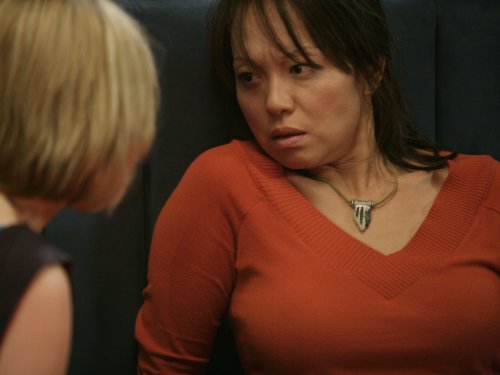
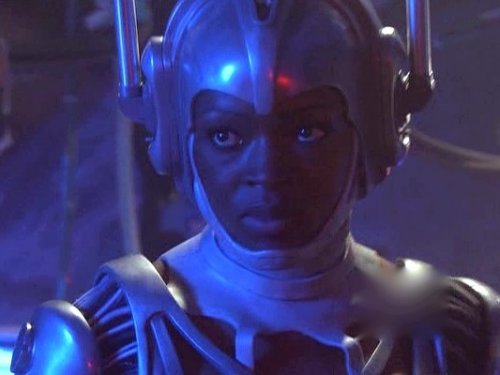
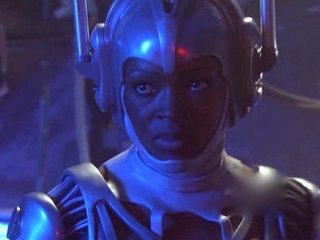 “Cyberwoman” was possibly the most satisfying of the first four episodes of “Torchwood”. I say possibly because there was nothing in it to match the two minutes screen time allotted John Normington in last week’s third episode, “Ghost Machine”. It wasn’t his dialogue, either, that captured the moment but the history of his character was all in John’s facial expressions. Gareth Thomas, too, made the most of his few scenes in the final twenty minutes of the same episode. His body language, especially the stooped gait, was spot on. This week’s fourth episode was similarly structured, in terms of the introduction of guest characters, in that we meet a Japanese Doctor early on, who has arrived to save the half-converted Cyberwoman’s soul, and a pizza delivery girl, who actually achieves, temporarily, what the Doctor couldn’t, towards the conclusion.“Cyberwoman” was a roller coaster of an episode only marred by the intrusion of attempted light relief. Gwen’s boyfriend phoning in order to get her to record “Wife Swap” was more of the same pop culture references that currently clog up new “Doctor Who”. Totally unnecessary; as was the need to engage the characters in yet more tedious tonsil tennis. I wonder if those scenes were written by the episode’s writer Chris Chibnall? James Strong’s direction lived up to the standard he set himself in “The Impossible Planet” except, here, he was allowed the luxury of more gore. The consequences of failed conversion were more explicitly explored in the demise of the two guest characters mentioned previously. What we really had in this episode was a reworking of Mary Shelley’s “Frankenstein”, with Ianto in the role of the obsessive Doctor character, of that novel, the Cyberwoman his creation, and the Japanese Doctor and pizza girl, not forgetting girlfriend Lisa, sacrifices to out-of-control science. “Doctor Who” has reworked “Frankenstein” before, of course, most obviously in “The Brain of Morbius” and therein lies the clue to the twist in this tale.Some loose ends weren’t readily tied up. “Cyberwoman” required a big leap of faith for the audience to easily accept that Ianto had never before aroused suspicions or that some other thing hadn’t drawn the Torchwood team’s attention to the possibility of something nasty in the basement. I’m pretty certain there isn’t an Ice Warrior in my loft though perhaps I better go and have another look! There is no way on Earth that Ianto should be allowed to stay on the team after this incident but “Torchwood” doesn’t seem bothered by any moral implications. In the first episode, “Everything Changes”, it was explained by Tosh that the body of a hospital porter, having been killed by a rogue Weevil, would be reported missing before being washed up on shore a few days later. I would like to have known how the bodies of the victims in “Cyberwoman” were to be disposed? You could hardly explain the Japanese Doctor’s Cyber eye away too easily or the pizza girl’s brain transplant! Surely she would be missed at work, at the very least. Unless they’re totally stupid, the takeaway services who supply Torchwood must already be becoming suspicious!Finally, I did enjoy the brief fight between Lisa the Cyberwoman and Myfanwy the Pterodactyl. It occurred to me that this was the dinosaur’s revenge for extinction in “Earthshock”, essentially at the hands of the Cybermen, and this provided the episode with an interesting cyclical aura; but maybe that’s just my fancy!
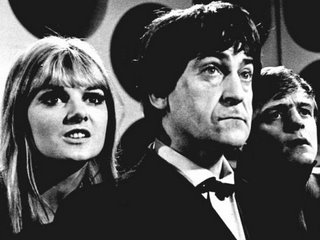 Whilst many people in the UK celebrate the suppression of conspirator Guy Fawkes, in 1605, there is another anniversary I would like to acknowledge! Forty years ago to the day, BBC1 broadcast episode one of “The Power of the Daleks”, the first story to star Patrick Troughton in the title role of “Doctor Who”. Pat’s successful continuation of the part made famous by predecessor William Hartnell, “the original, you might say”, ensured the survival of this family-orientated science fiction drama series through successive generations. His contribution to the legend that is “Doctor Who” shouldn’t be underestimated simply because his era of the programme isn’t well-represented in the BBC archive. A great number of programmes replace one actor with another, in the same role, without explanation simply because, in story terms, it’s unexplainable! “Doctor Who” built this necessity into the ongoing narrative, turning something potentially disastrous for the show into something positive.Patrick also made the role his own. From being a grumpy old man, and I use the phrase with the greatest affection, used to dusting the TARDIS console with his handkerchief, the Doctor regenerated into an impish, recorder-playing, vagabond of the skies, whilst still retaining the respect of the programme’s many followers. Critics maintain that the Doctor you see first remains your favourite. My first was Bill but I’ve always found it hard to choose between him and Pat due to the fact that Pat’s middle season of three, season five, remains my favourite year of “Doctor Who”, and “Fury from the Deep”, from near the end of that season, my all-time favourite story. So many of my favourite “Doctor Who” stories emanate from the Patrick Troughton era. Another, “The Invasion”, raising the Cybermen out of the sewers to march against the backdrop of St Paul’s Cathedral, is out on DVD tomorrow.Troughton confronted the Cybermen no less than four times so that his era became synonymous with the period of “Doctor Who” when those monsters of logic were at their most powerful in capturing the nation’s imagination. Of the twenty-one stories he recorded for television, between 1966 and 1969, ten featured what are now regarded as the four most popular monsters of the Sixties. The second Doctor battled the Daleks twice, both in his first year, and other “classic” confrontations pitted him against “The Ice Warriors” and “The Abominable Snowmen”. His second meeting with the Cybermen, in the Tombs on Telos, presumed lost forever, was miraculously discovered and returned to the archive for the benefit of enthusiasts everywhere, whilst his second meeting with those furry Yeti, in the London Underground, in “The Web of Fear”, is much loved by most fans blessed with a reasonably good memory! The aforementioned final black and white encounter with the Cybermen, as well as the second Yeti story, were directed with elegant precision by Douglas Camfield. In a month which also sees the collected DVD release of recent material featuring the Cybermen, if you could only choose one or the other, Troughton’s eight-part “Invasion” or the four Tennant Cybermen episodes, which would you prefer?
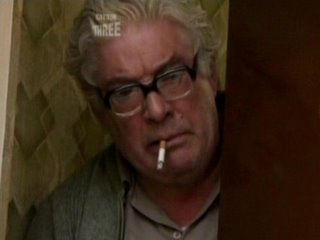
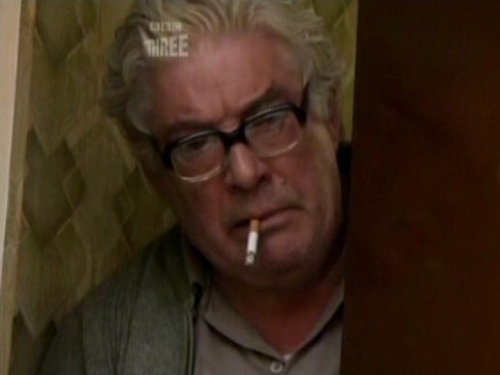
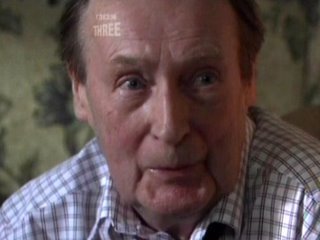 Episode three of “Torchwood”, “Ghost Machine” by Helen Raynor, was an improvement on the first couple of stories shown last week. It wasn’t perfect but held the attention more readily. The plot was reasonably involved, concerning an alien device which can initially enable its handler to relive past events but latterly to foresee the future. But just how complete a picture does it give of the shape of things to come? Will Jimmy White look-a-like Owen Harper (Burn Gorman) really avenge a past crime or will a certain leading lady, by the name of Eve Myles, be the one to accidentally twist the knife in?!The direction seemed to move at a faster pace than previously (which isn’t necessarily a good thing), especially in the way the teaser was edited. Best of all, “Ghost Machine” featured a superb cameo from John (“The Caves of Androzani” and “The Happiness Patrol”) Normington and a star turn from a cigarette smoking, haggard looking, Gareth (“Blake’s 7”) Thomas as a guilt-ridden ex-teddy boy! The scene in which Owen exposes the terror of Gareth’s ways was terrific, a lot more fun than the chase through the back gardens of suburban Cardiff that was the focus of the following “Confidential”-like documentary “Torchwood Declassified”.In “Ghost Machine”, John Normington played against expectations, a mild-mannered ageing evacuee, the complete opposite of the Trau Morgus character from his first “Doctor Who” - the embodiment of an ambitious, ruthless, corrupt politician best remembered for turning to camera and exclaiming, “The spineless cretins”. I also recall him in a play, made shortly after “Caves”, in which he co-starred with Patrick Troughton, about a jazz musician, played by the ex-Doctor, who loses his memory and goes missing only to end up at a pub called, appropriately enough, The Northern Star. It was on BBC2 but, unfortunately, brief research on both IMDb and Google has failed to reveal its title.Gareth Thomas, on the other hand, as well as his most famous role, I remember in BBC dramas “The Citadel” and “Morgan’s Boy” as well as an ITV Sunday afternoon children’s serial, also co-starring Patrick Troughton (in his final role), entitled “Knights of God”. I still have a copy of the latter on a couple of Betamax tapes, which also featured Don Henderson, John Woodvine, Michael Sheard and Julian Fellowes, amongst others, and was directed by Michael (“Battlefield”) Kerrigan and Andrew (“Time and the Rani” and “Remembrance of the Daleks”) Morgan. Though it’s a long time since I watched it, I do remember it contained some plot inconsistencies but was nevertheless a fun, if undemanding, watch.Returning to the present, it was good to see both Gareth Thomas and John Normington again, and on such fine form, and a bonus that it was in an SF drama. I didn’t notice any direct references to parent show “Doctor Who”, this week, but next week’s episode couldn’t be more connected if it tried, the eagerly awaited “Cyberwoman”. I’m ever-optimistic!
 I have to admit a success on the part of Russell T. Davies! He successfully fooled me, and no doubt countless others, into believing second-in-command Suzie Costello (Indira Varma) would be a regular of the “Torchwood” team. But she’s not, and that’s why she wasn’t at the press launch last week and thus absent from the subsequent photo (see post before last). She was simply a guest in the opening episode, “Everything Changes”, despite the misleading publicity, appearing with the other five on the cover of the Radio Times and with a profile inside, equal to that of the truly-regular members of the cast. I’m not usually so gullible. At least, I hope not. As soon as I saw Tom Cruise confiding in Max Von Sydow, for example, (the previous evening) early on in “Minority Report”, I guessed the outcome. For all its SF trappings, Spielberg’s film is a very traditional affair. And it isn’t as if “Torchwood” is the first series to bump off a “regular” so soon. I’m sure fans of “Spooks” haven’t forgotten the almost immediate demise of Lisa Faulkner. So I was taken in, tricked, not surprised exactly because I hadn’t really had a chance to get to know the character. Was this ploy meant to endear me to the new series or irritate me into dislike? Alienating the audience is becoming a habit with RTD shows. It happened in the last series of “Doctor Who”, at least twice, at the beginning of both “Rise of the Cybermen”, with the humiliation of Mickey, and on arrival in “The Impossible Planet”, whatever the merits might be of the remainder of those two stories.I didn’t really warm to “Torchwood”, regardless of being duped. The rain looked fake in the opening scenes and the blood spurting from the neck of a hospital porter, having been bitten by a rogue Weevil, the main creature in this new series, was over enthusiastic. Adult doesn’t have to mean copious amounts of gore, cartoon sex and what is euphemistically called strong language! For much of its original run, “Doctor Who” was, and still is, a far more mature affair than either new “Doctor Who” has so far proved to be or “Torchwood” looks like being. A secret subterranean base, the Hub, beneath the centre of Cardiff, reminds of “Batman” while the stone lift rising to street level, cloaked in invisibility until disembarkation, is reminiscent of “Thunderbirds”. Mix what is generally thought of as the province of children’s television with generous lashings of tonsil tennis and supposedly risqué ideas, in the second episode, Chris Chibnall’s “Day One”, lifted from “The Outer Limits” episode “Caught in the Act”, which starred “Charmed” actress Alyssa Milano, only goes to prove Mr. Davies doesn’t have a clue for whom his new series is intended. A person’s level of writing speaks volumes about their maturity. That’s why Claire Tomalin was able to successfully reveal on “The South Bank Show” (later the same evening), with great warmth, wit and enthusiasm, the true nature of Thomas Hardy, the poet, novelist and most-importantly the man, from his writing alone, given that he had destroyed all important documentation pertaining to his life. Unfortunately, there is too much on record for this to be the case with Russell T. (for “Torchy, the Battery Boy”) Davies!


 Starring opposite David Tennant, in “The Runaway Bride”, is actress Sarah Parish playing the sinister Empress of the Racnoss, seen here together at the Bafta Television Awards, 2005. They’ve also worked together before on “Blackpool” and, perhaps of some interest, Sarah has additionally worked with Ms. Piper but not on “Doctor Who”. They both appeared in last year’s reinterpretation of Shakespeare’s “Much Ado About Nothing” and, if you don’t already know, no prizes for guessing which playwright pops up in the second episode of next year’s new season of Time Lord adventures. I reckon they eat a lot of Chinese takeaway in the television industry, influencing them to use few ingredients but in every possible permutation! However, the publicity for this year’s Special seems focused on Ms. Tate so, as it’s Christmas, I’ve prepared another ten-picture gallery for your delectation. After all, Christmas wouldn’t be Christmas without one of Mr. Davies’ famous plum puddings!!